

Timeline
The beginnings

The book «A vision for the future of public management and relations with citizens» is published.
After 20 years of experience in international companies and consulting, Iván Nabalón combines his passion for technology with his experience of public administration projects and writes the book that would lay the foundations for the Foundation.
At the height of his professional career, he finds his purpose: exploring how technology can improve people’s lives by strengthening democracy.
He leaves his position as an executive at an international management consulting firm to create a project aimed at transforming democracy.
civitana.org is born
civitana.org is created, the world’s first civic participation network with legal assurance.
He raises funds from family and friends to create civitana.org, the first civic participation network with legal assurance, combining the efficiency of social networking technology with the security and legitimacy of an early, easy-to-use electronic identity card.
The first version of Electronic IDentification, an easy-to-use digital signature, is created. VideoID is also developed, enabling something unprecedented at the time: remote identification of citizens with the same technical security as face-to-face identification.
The project fails
The civitana.org project fails. There are several reasons: it arrives too early; there is no time to explain its value to citizens; no regulation exists to permit remote identification; and the funding runs out.
However, we begin demonstrating the technology we created to identify people remotely (video identification) to banks and insurance companies. At the time, the financial industry was undergoing a period of rationalisation, with mergers and the closure of physical branches. The online channel begins to gain importance and we realise that the project may have a second chance.
eID is born
The banks take us to the regulator that requires secure identification for financial transactions: SEPBLAC – Servicio Ejecutivo de la Comisión de Blanqueo de Capitales e Infracciones monetarias. After seeing the technology, and in time, it decides to create pioneering regulation that enables banks to identify people online through video identification.
The regulation allows banks to integrate this form of identification and acquire new customers online, creating an opportunity and, ultimately, a new industry in electronic security. As the first company to develop video identification technology, Civitana becomes Electronic IDentification (eID), giving the project a second chance in the private sector.
International expansion
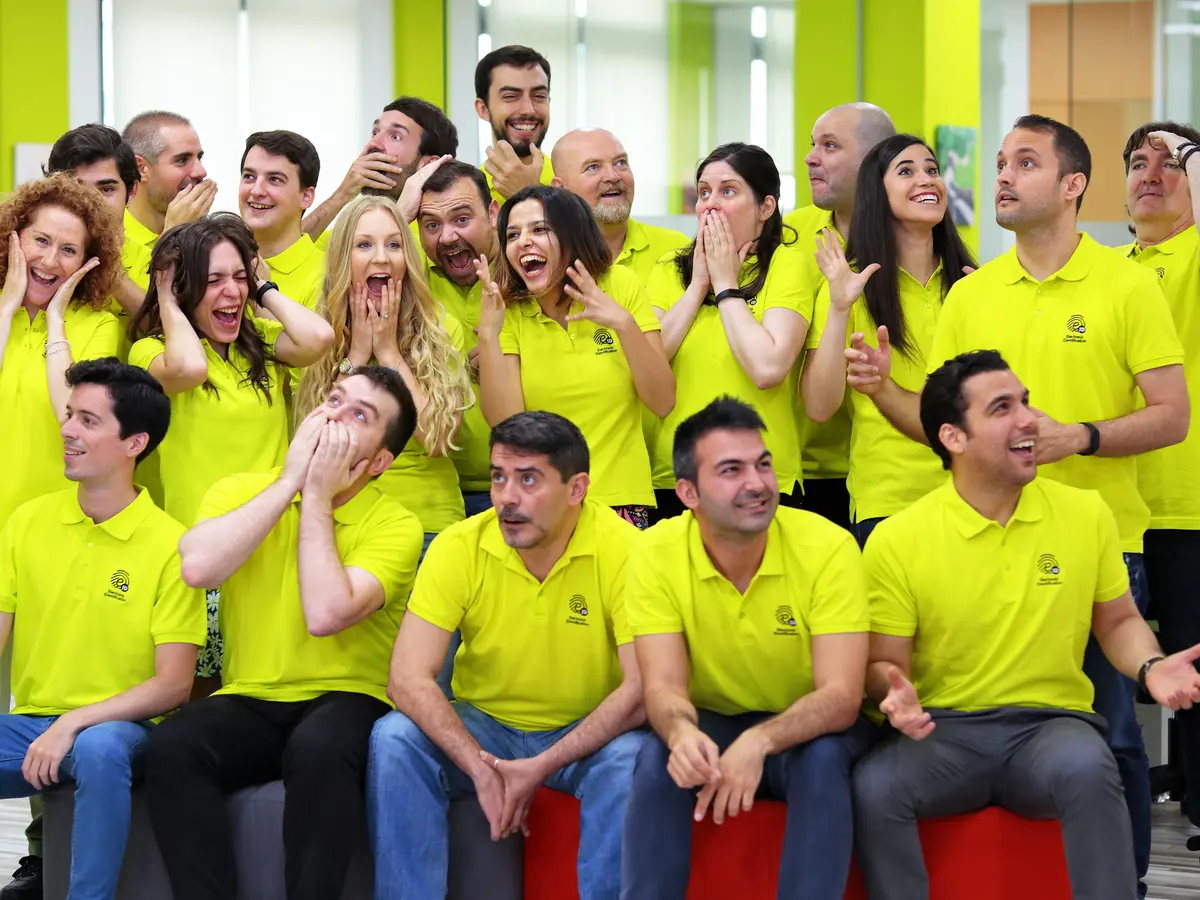
During this period, eID established itself as the world’s first electronic trust services provider to offer a qualified digital signature with full legal equivalence to a handwritten signature. This milestone was not only a technological achievement, but also an extensive process of regulatory learning and technical execution.
Building on the pioneering regulatory developments in Spain and Europe, we worked with digital identity regulators across four continents and more than 50 countries, from China, Japan and Vietnam to the United States and every country in Latin America.
This stage was critical not only because of commercial growth, but also because of the deep development and learning it brought from a global perspective. We became technical authorities, acquiring the standing and influence needed to understand how digital identity could, in the future, protect not only financial and healthcare transactions, but also citizens’ fundamental rights by enabling them to participate actively in public life.
Impact on democracy
That year, we worked with Instituto de Empresa on a study based on the premise that social trust, supported by a strong official identity, is a pillar of modern societies because it creates the confidence needed for secure relationships. We found a direct correlation between institutional strength and citizens’ wellbeing: each one-percentage-point improvement in The Economist’s democracy index has a positive impact of 13.6% on quality of life. This progress translates into a US$13,286 increase in per capita income, a 2.6-year gain in life expectancy and a two-point reduction in the inequality coefficient, demonstrating that stronger democracy leads directly to economic prosperity and social equity.
In the summer of 2020, eID won Europe’s largest contract to digitise France’s social security card for more than 45 million citizens, beating leading competitors in France and Germany at the time.
Since then, the digital identity technology created at civitana.org has become the internet standard for identifying millions of people every day, not only in finance but also in other regulated sectors such as healthcare and public administration—the purpose for which it had been created eight years earlier.
Sale of eID
The acquisition of eID by the Norwegian Signicat group marked the end of a successful chapter in the private sector and became the definitive catalyst for the original purpose. This divestment provided the resources and freedom needed to channel all the knowledge gained from developing technology infrastructure towards serving citizens exclusively and strengthening democracy.
After years of creating, developing and scaling digital identity technology in the private sector, we had accumulated the knowledge and resources required to complete the original cycle: applying that same technological power in the service of citizens and democracy, which had always been our purpose.
This stage also concluded with the global regulatory standardisation of this type of identity in highly regulated industries such as finance, healthcare and public administration. It marked a turning point in the internet era by providing a legal basis for legitimacy online and for secure, private interactions, including citizens’ exercise of sovereignty in a democracy.
The Foundation is created
We revive our life’s project: to help transform how we live together in a democracy through secure, active participation in public life. Drawing on all the experience gained over these years, we create Fundación Civitana.
The Foundation begins analysing and developing its own digital identity technology, with a vision to create an advanced new generation of digital identity that citizens can adopt for everyday secure transactions online. The vision is for it to become the backbone of modern democracies by providing, for the first time in history, a secure, privacy-preserving and fully trustworthy mechanism for any transaction—especially the systematic participation of citizens in public life.
Launch of Civitana.ID
The Foundation completes the development of the complex technology intended to change the world as we know it. It also becomes an Electronic Trust Service Provider and Certification Authority under the eIDAS Regulation (EU) No 910/2014, giving it the assurance of the strictest electronic security certification for issuing digital identities to citizens.
In addition, it launches the first electronic democracy project to use the technology. The project, called Civify, aims to use the new identity so that citizens can collaborate on shared projects, sign them electronically and submit them to public authorities with legal assurance—taking a first step towards shaping a new way of living together in a democracy.
Receive news from the Civitana Foundation.


The Foundation’s central project: Civitana.ID.
Civitana.ID brings the Foundation’s vision to life through a new generation of digital identity services.